Amla (Indian Gooseberry) Juice

Gooseberry (English), Nellikkai (Tamil), Amla (Hindi), Amalaki (Sanskrit), Emblica officinalis (Botanical).
Indications: Best among rejuvenatory fruits; Cold in potency; Balances Vata, Pitta and Kapha.
Recommended for: Anemia, Asthma, Bleeding diseases, Constipation, Cough, Skin diseases, Diseases of heart, Jaundice, Weight loss
Ingredients: Gooseberry or Nellikai - 100gm; Jagery - 50gm; Water - As Required
Preparation: Light steam boil the fruit after removing seeds. Blend the gooseberry fruit. Add required water and jagery.
Indications: Best among rejuvenatory fruits; Cold in potency; Balances Vata, Pitta and Kapha.
Recommended for: Anemia, Asthma, Bleeding diseases, Constipation, Cough, Skin diseases, Diseases of heart, Jaundice, Weight loss
Ingredients: Gooseberry or Nellikai - 100gm; Jagery - 50gm; Water - As Required
Preparation: Light steam boil the fruit after removing seeds. Blend the gooseberry fruit. Add required water and jagery.
Beetroot Juice
Beetroot (English), Beetroot (Tamil), Beetroot (Hindi), Beta Vulgaris (Botanical),

Recommended for: Antioxidant, Blood pressure, Blood vessel widens, Detoxifier, Improves Blood circulation, Cancer prevention, Digestion diseases,Lowers bad cholesterol level
Properties: Alkalizer, Aphrodisiac, Balances pitta and kapha, Blood purifier, Healing, Nourishing , Improves immunity in children, Protects liver, Rich in magnesium, phosphorus, sodium, potassium and calcium as well as small amounts of copper, selenium, zinc, iron and manganese.
Ingredients: Beetroot - 100gm, Palm sugar - 30gm, Lime Juice - one tsp , Water if required
Preparation: Extract the juice from the carrot in a blender. Add palm sugar to the extracted juice. Add lime juice and stir well.
Properties: Alkalizer, Aphrodisiac, Balances pitta and kapha, Blood purifier, Healing, Nourishing , Improves immunity in children, Protects liver, Rich in magnesium, phosphorus, sodium, potassium and calcium as well as small amounts of copper, selenium, zinc, iron and manganese.
Ingredients: Beetroot - 100gm, Palm sugar - 30gm, Lime Juice - one tsp , Water if required
Preparation: Extract the juice from the carrot in a blender. Add palm sugar to the extracted juice. Add lime juice and stir well.
Carrot Juice

Carrot (English), Karat (Tamil), Gaajara (Hindi), Gaajara (Sanskrit), Daucus carota (Botanical)
Recommended for: Bleeding diseases, Cold and cough, Laxative, Piles, Sprue, Ulcers.
Properties: Alkalizer, Aphrodisiac, Balances pitta and kapha, Blood purifier, Healing, Nourishing , Improves immunity in children, Protects liver, Rich in beta carotene (i.e, anti-cancerous properties, especially lung Cancer), Calcium, Iron, phosphorus, Potassium, Sodium, Sulphur, Vitamin A and C and other minerals.
Ingredients: Carrot - 100gm, Palm sugar - 30gm, Lime Juice - one tsp , Water if required
Preparation: Extract the juice from the carrot in a blender. Add palm sugar to the extracted juice. Add lime juice and stir well.
Recommended for: Bleeding diseases, Cold and cough, Laxative, Piles, Sprue, Ulcers.
Properties: Alkalizer, Aphrodisiac, Balances pitta and kapha, Blood purifier, Healing, Nourishing , Improves immunity in children, Protects liver, Rich in beta carotene (i.e, anti-cancerous properties, especially lung Cancer), Calcium, Iron, phosphorus, Potassium, Sodium, Sulphur, Vitamin A and C and other minerals.
Ingredients: Carrot - 100gm, Palm sugar - 30gm, Lime Juice - one tsp , Water if required
Preparation: Extract the juice from the carrot in a blender. Add palm sugar to the extracted juice. Add lime juice and stir well.
Cucumber Juice
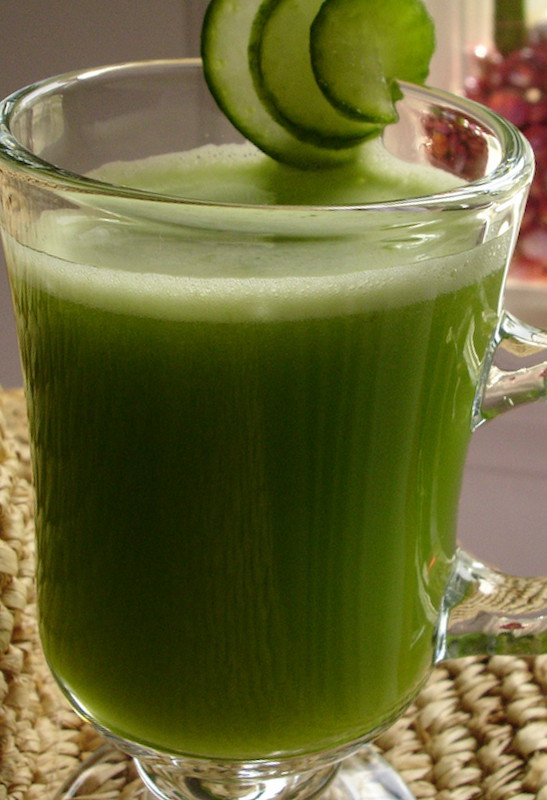
Cucumber (English), vellerikkai (Tamil), kakdi (Hindi), karkati (Sanskrit), Cucumis utilissimus Linn (Botanical)
Recommended for: Cancer, Difficulty in passing urine, Heart diseases, Loss of appetite, Relieves Eczemas
Properties: Antidote. Anti-poisonous, Balancing of three doshas, Binds stools, Cools Body, Dietary Fiber, Digestion Problems, Diuretic, Fluid Restoration, Rich in Vitamin C, Folate and Potassium, Thirst Quencher,
Ingredients: Cucumber (medium) 100gm; Buttermilk 50ml; Rock salt 3gm; bunch of chopped curry leaves and coriander leaves
Preparation: Extract juice from the cucumber in a blender; Grind & squeeze the juice of coriander leaves & curry leaves. Add buttermilk, a pinch of rock salt, chopped curry leaves and coriander leaves and beat the ingredients again and serve.
Recommended for: Cancer, Difficulty in passing urine, Heart diseases, Loss of appetite, Relieves Eczemas
Properties: Antidote. Anti-poisonous, Balancing of three doshas, Binds stools, Cools Body, Dietary Fiber, Digestion Problems, Diuretic, Fluid Restoration, Rich in Vitamin C, Folate and Potassium, Thirst Quencher,
Ingredients: Cucumber (medium) 100gm; Buttermilk 50ml; Rock salt 3gm; bunch of chopped curry leaves and coriander leaves
Preparation: Extract juice from the cucumber in a blender; Grind & squeeze the juice of coriander leaves & curry leaves. Add buttermilk, a pinch of rock salt, chopped curry leaves and coriander leaves and beat the ingredients again and serve.
Dates Juice
Dates (English), Pereecham pazham (Tamil), Chuhada (Hindi), Karjura (Sanskrit), Phoenix sylverstris (Botanical)
Recommended for: Anemia, Aphrodisiac, Burning sensation, Injury, Gain weight, Improves Kapha and Semen, Weight Gain and Weight loss.
Properties: Binds the stools, Blood purifier, Cold in potency, Digestion Problems, Nourishing, Reduces Vata and Pita Doshas, Unctuous in quality, Rich in protein,minerals and essential amino acids.
Ingredients: Coconut (Riped) – 1, Dates – 15 gm, Water – as desired
Preparation: Extract coconut milk from the scraped coconut. Soak the seedless dates in it for 1 hour. Make a paste of this mixture. If required, a little water may be added.
Recommended for: Anemia, Aphrodisiac, Burning sensation, Injury, Gain weight, Improves Kapha and Semen, Weight Gain and Weight loss.
Properties: Binds the stools, Blood purifier, Cold in potency, Digestion Problems, Nourishing, Reduces Vata and Pita Doshas, Unctuous in quality, Rich in protein,minerals and essential amino acids.
Ingredients: Coconut (Riped) – 1, Dates – 15 gm, Water – as desired
Preparation: Extract coconut milk from the scraped coconut. Soak the seedless dates in it for 1 hour. Make a paste of this mixture. If required, a little water may be added.
Papaya Juice
Papaya (Papaya), Pappali (Tamil), Papita (Hindi), Eranda Karkati (Sanskrit), Carica papaya (Botanical)

Recommended
for: Allergies, Amenorrhea, Anemia, Asthma, Cardiovascular
diseases, Colon cancer, Osteoarthritis, Sports injuries, Trauma.
Properties: Appetizer and Digestion improver, Balances kapha and vata, Binds stools, Boosts immunity, Increases pitta, Reduces inflammation, Rich in anti oxidant nutrients,
Ingredients: Papaya – 1 medium size fruit, Palm sugar – 30 gm, Water : Desired quantity
Preparation: Peel and de-seed papaya. Dice and blend it in a mixer. Add palm sugar and water if required. Beat it again and serve.
Properties: Appetizer and Digestion improver, Balances kapha and vata, Binds stools, Boosts immunity, Increases pitta, Reduces inflammation, Rich in anti oxidant nutrients,
Ingredients: Papaya – 1 medium size fruit, Palm sugar – 30 gm, Water : Desired quantity
Preparation: Peel and de-seed papaya. Dice and blend it in a mixer. Add palm sugar and water if required. Beat it again and serve.
Plantain Pith Juice

Plantain (Plantain), Valaithandu (Tamil) Kela (Hindi), Kadali kanda (Sanskrit), Musa paradisiaca (Botanical)
Recommended for: Obesity, Urinary stones, Ulcers, Burning sensation, Acidity, Diabetes, Bleeding disorders, Menorrhagia
Properties: Alkalizer, Bitter & astringent in taste, natural diuretic, Cold in potency, Reduces cholesterol, Its astringent quality helps in blood coagulation,
Ingredients: Plantain’s pith of the stem – 100gm; Buttermilk – 50 ml; Rock salt – 3 gm; Water – 50 ml
Preparation: Put the plantain stem in juicer and extract the juice. Add little buttermilk, water and rock salt. Stir well and serve.
Recommended for: Obesity, Urinary stones, Ulcers, Burning sensation, Acidity, Diabetes, Bleeding disorders, Menorrhagia
Properties: Alkalizer, Bitter & astringent in taste, natural diuretic, Cold in potency, Reduces cholesterol, Its astringent quality helps in blood coagulation,
Ingredients: Plantain’s pith of the stem – 100gm; Buttermilk – 50 ml; Rock salt – 3 gm; Water – 50 ml
Preparation: Put the plantain stem in juicer and extract the juice. Add little buttermilk, water and rock salt. Stir well and serve.
Pumpkin Juice

Pumpkin (English), Poosanikkai (Tamil), Petaa (Hindi), Kooshmaanda (sanskrit), Cucurbita maxima (Botanical)
Recommended or Beneficial for: Chronic Fever, Calculi, Diabetes, Difficult urination, Excessive bleeding, Excessive thirsty condition, Fever due to Pitta, Internal fever, Leucorrhoea, Loss of appetite, Obesity, Skin diseases, Toxicity
Properties: Aphrodisiac, Balances Pitta dosha, Clears the urinary tract, Diuretic, Laxative, Nourishing, Relieves three doshas.
Ingredients: Yellow Pumpkin Pulp – 300gm, Jaggery or Sugar – 20 gm, Water – Desired Quantity
Preparation: Extract juice from pumpkin using blender. Add desired quantity of sugar or honey (in case of obesity).
Recommended or Beneficial for: Chronic Fever, Calculi, Diabetes, Difficult urination, Excessive bleeding, Excessive thirsty condition, Fever due to Pitta, Internal fever, Leucorrhoea, Loss of appetite, Obesity, Skin diseases, Toxicity
Properties: Aphrodisiac, Balances Pitta dosha, Clears the urinary tract, Diuretic, Laxative, Nourishing, Relieves three doshas.
Ingredients: Yellow Pumpkin Pulp – 300gm, Jaggery or Sugar – 20 gm, Water – Desired Quantity
Preparation: Extract juice from pumpkin using blender. Add desired quantity of sugar or honey (in case of obesity).
Tender Coconut Water

Tender Coconut (English), Ilaneer (Tamil), Nariyal Pani (Hindi), Narikela Pani (Sanskrit), Cocos Nucifera (Botanical)
Properties: Aphrodisiac, Cooling, Diuretic (mild), Light to digest, Reduces Pitta & Vata doshas, Refreshing Tonic, Rehydrator (replace saline), Rich in mineral salts, Urinary bladder Cleanser,
Recommended for: Diabetes, Heat boils, Itching, jaundice, Measles, Nausea, Pimples, Prickly heat, Sun burn, Urinary diseases, Urinary stones, Vomiting , Worm infestation (for children)
Ingredients: Tender coconut water
Consume in its 1. Natural form 2. With Tender coconut water add 2 spoons full (10 ml) and milk 50ml. 3. Tender Coconut water - 150 ml add few drops of Lemon juice.
Properties: Aphrodisiac, Cooling, Diuretic (mild), Light to digest, Reduces Pitta & Vata doshas, Refreshing Tonic, Rehydrator (replace saline), Rich in mineral salts, Urinary bladder Cleanser,
Recommended for: Diabetes, Heat boils, Itching, jaundice, Measles, Nausea, Pimples, Prickly heat, Sun burn, Urinary diseases, Urinary stones, Vomiting , Worm infestation (for children)
Ingredients: Tender coconut water
Consume in its 1. Natural form 2. With Tender coconut water add 2 spoons full (10 ml) and milk 50ml. 3. Tender Coconut water - 150 ml add few drops of Lemon juice.
Reference: Medindia. net, Ayurvedic Diet, Juices.
